One product was serving incompatible jobs
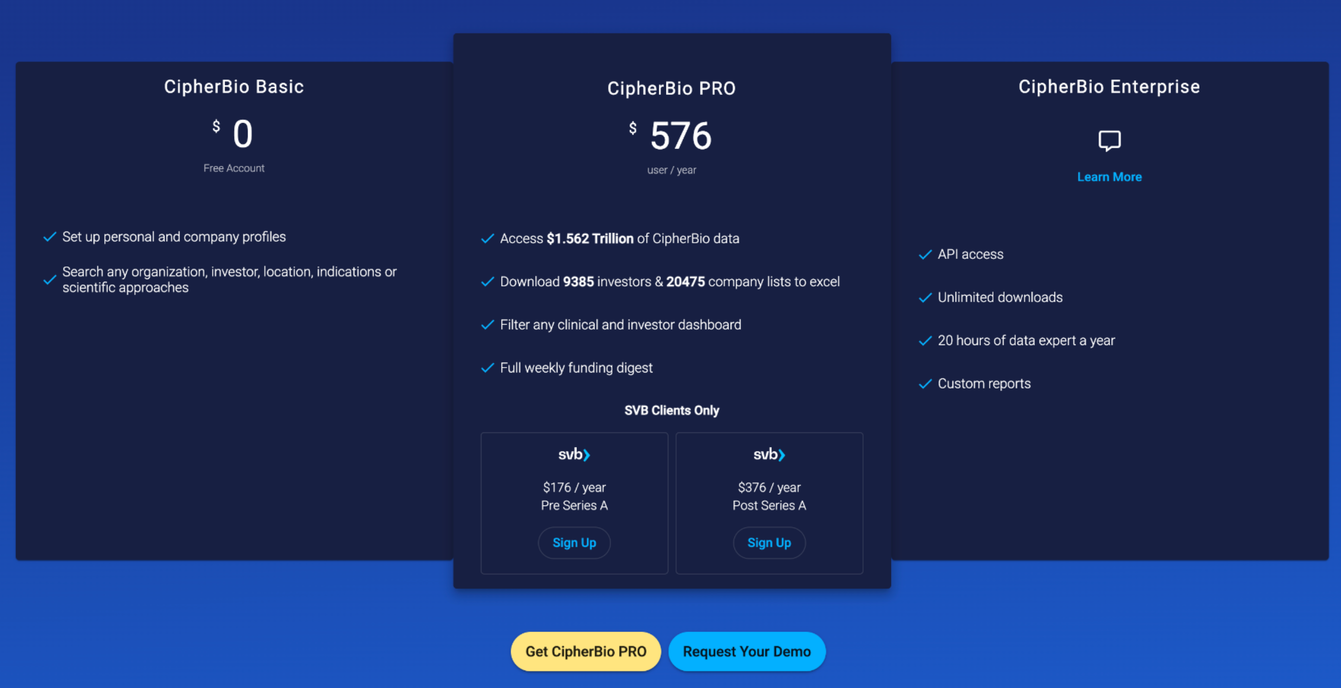
Founders and investors wanted different data, entered with different agendas, and had different price points. Free users, PRO members, SVB clients, and enterprise buyers also required different access.
CipherBio case study · Life-sciences SaaS
CipherBio had mapped more than $1.5 trillion in life-sciences funding, but the product was hard to use, impossible to monetize, and disconnected from its marketing. I connected product design, front-end development, pricing, analytics, and digital marketing so the product and its acquisition story worked as one system.
2022 digital sales revenue after paid tiers and an aligned launch system.
A free database became a paid intelligence product.
Reduced through a new digital acquisition strategy.
Share of leads attributed to digital marketing.
Problem: The situation
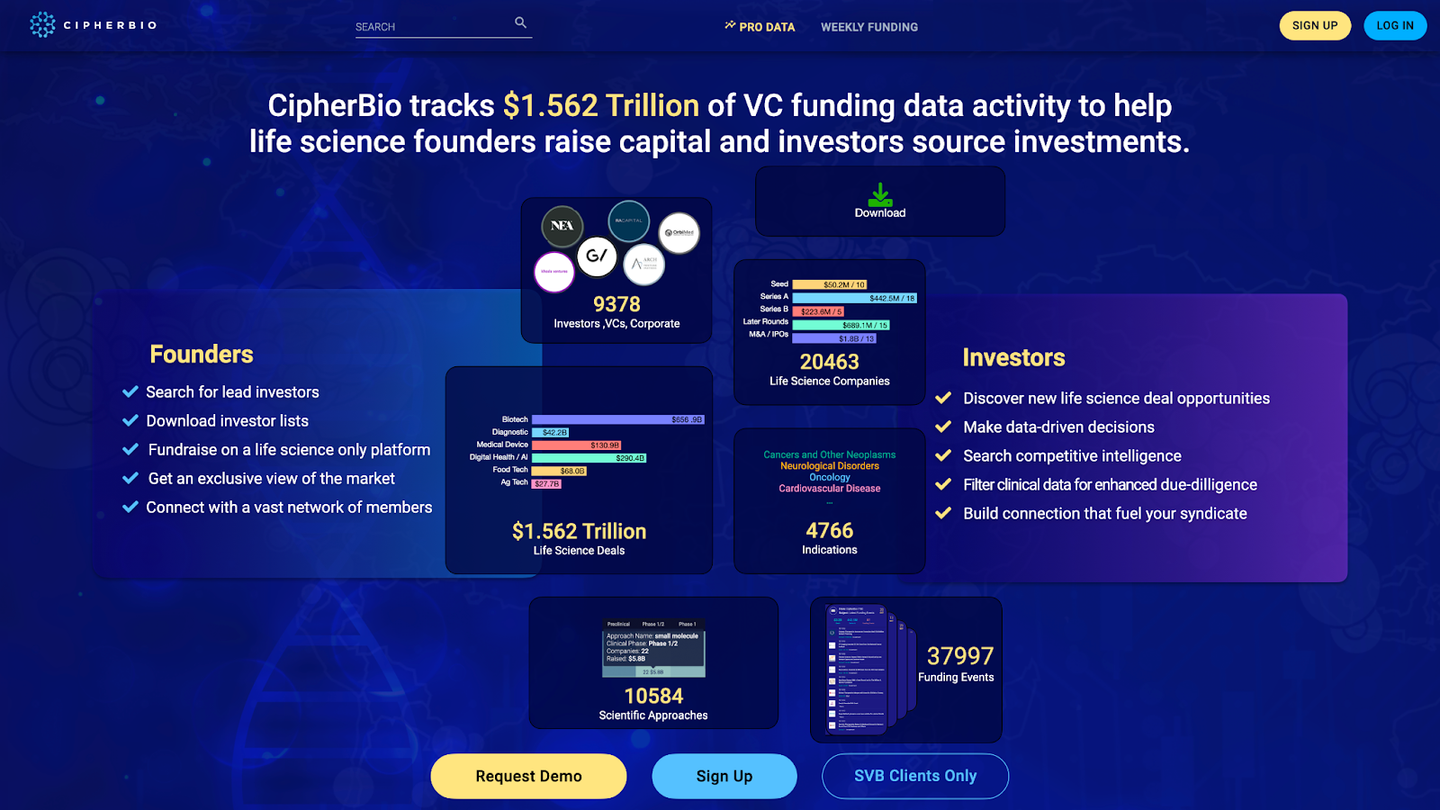
CipherBio had valuable data and eager users, but no pricing model, no usable mobile experience, no meaningful analytics, and no credible route from free access to paid utility.
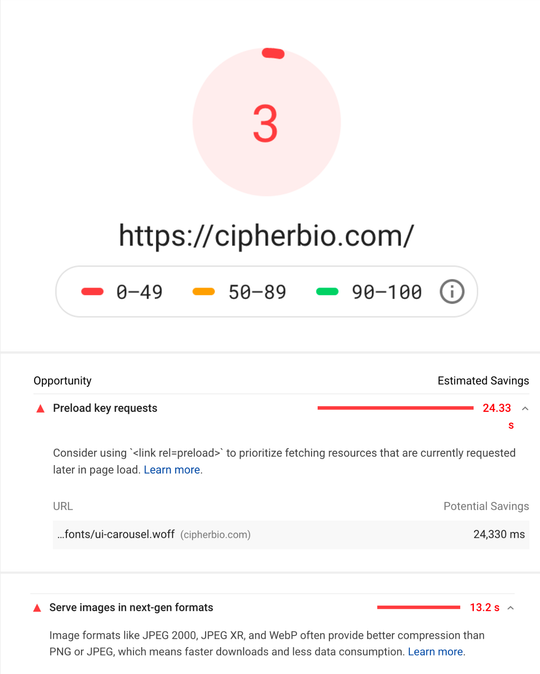
The existing experience was difficult to navigate, slow and unreliable on mobile, and built around the structure of the database rather than the questions founders and investors brought to it. Tables were unreadable on smaller screens, dashboards lacked clear controls, and product releases were disconnected from onboarding, messaging, and acquisition.
Without a credible revenue path, CipherBio risked remaining a free funding database rather than becoming a defensible SaaS product.
The work had a limited budget and operated inside SVB corporate rules, restricted tools, and slow production approvals. Design, development, testing, and marketing could not wait for a clean sequential process.
Approach: What I found
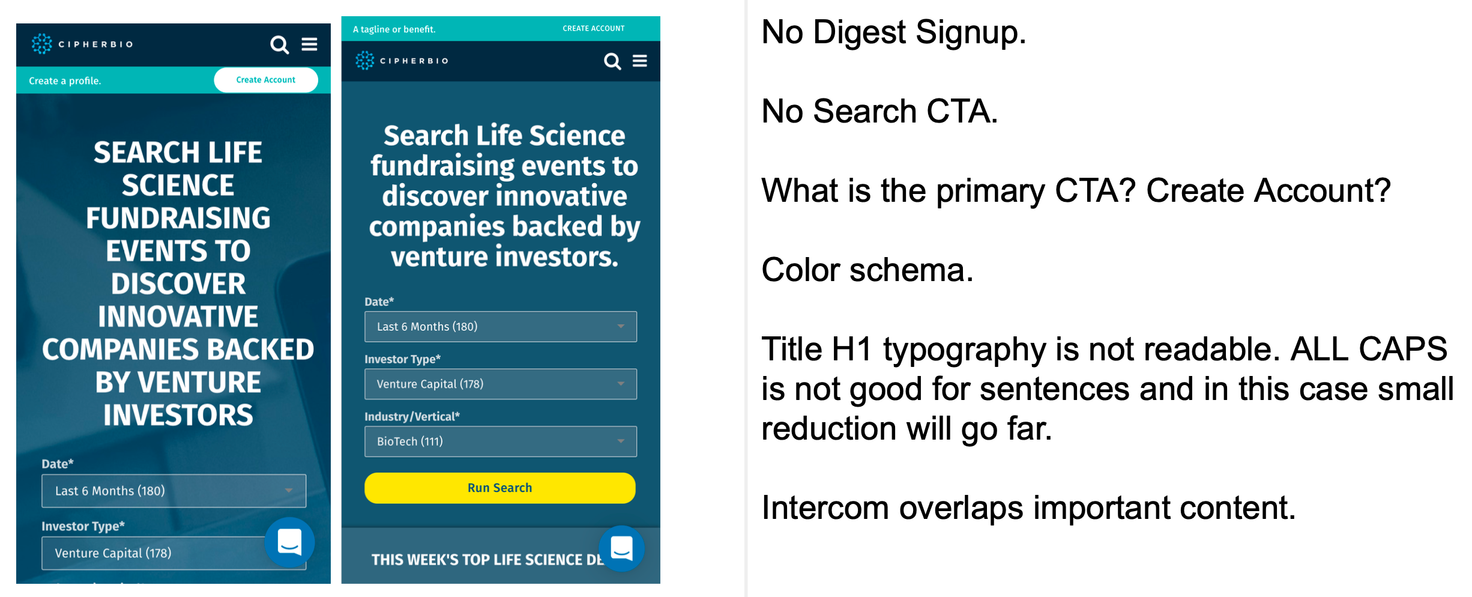
The audit showed where the interface failed. Interviews, surveys, task analysis, analytics, stakeholder workshops, and functional demos revealed a larger system problem: product value, implementation, and acquisition were not aligned.
Founders and investors wanted different data, entered with different agendas, and had different price points. Free users, PRO members, SVB clients, and enterprise buyers also required different access.
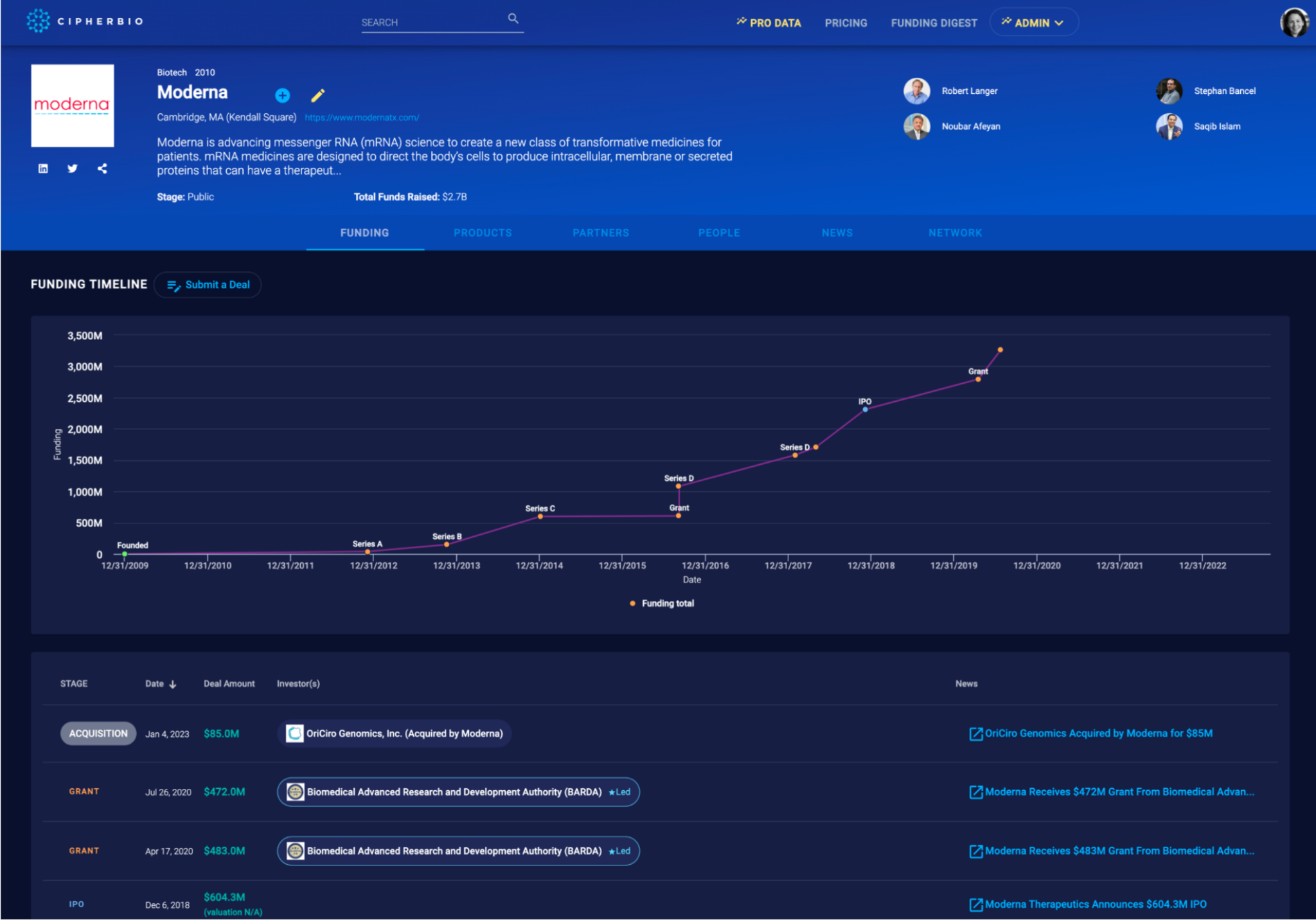
Users did not want to maintain detailed profiles or consume long descriptions. Spotty editing weakened data quality while the most useful funding history remained buried.
The product had no useful KPI framework or conversion path. SEO, landing pages, advertising, onboarding, pricing, and releases were telling different stories.
Approach: Jobs and pricing
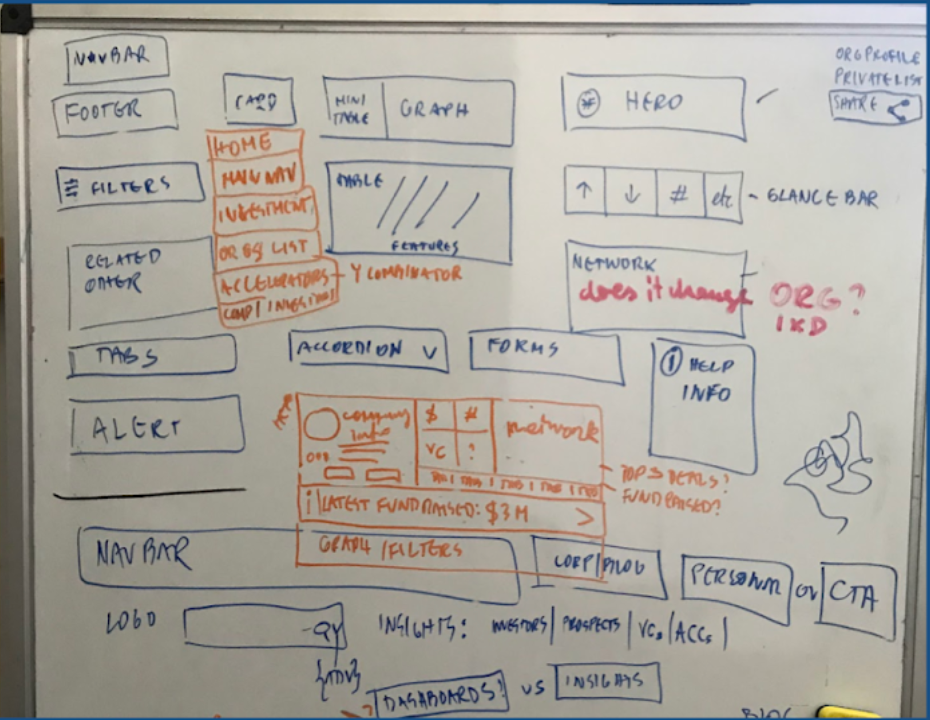
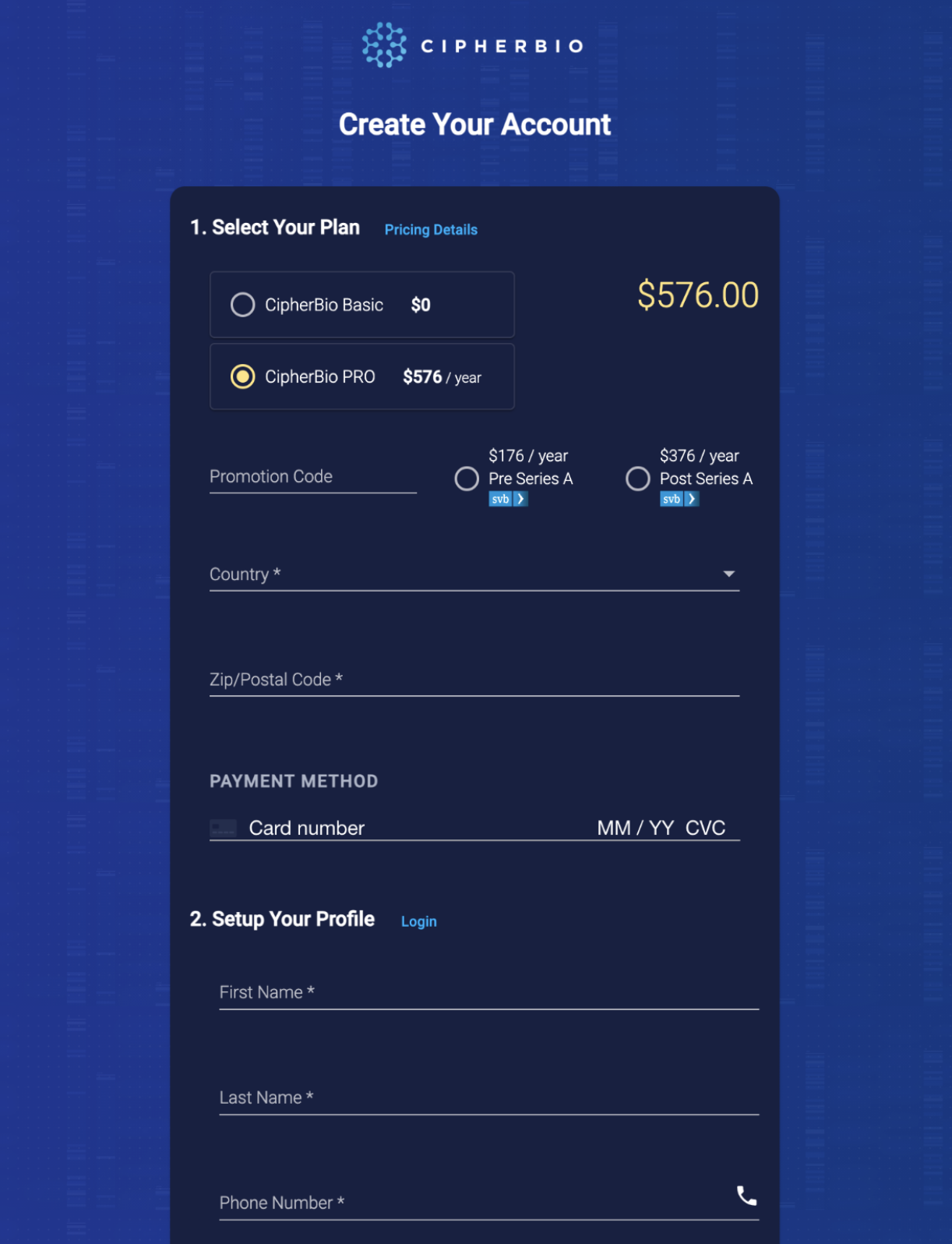
Monetization could not be solved by putting a price on the existing experience. The offers had to correspond to different levels of utility for founders, investors, free users, SVB clients, and enterprise organizations.
Approach: Evidence over sunk work
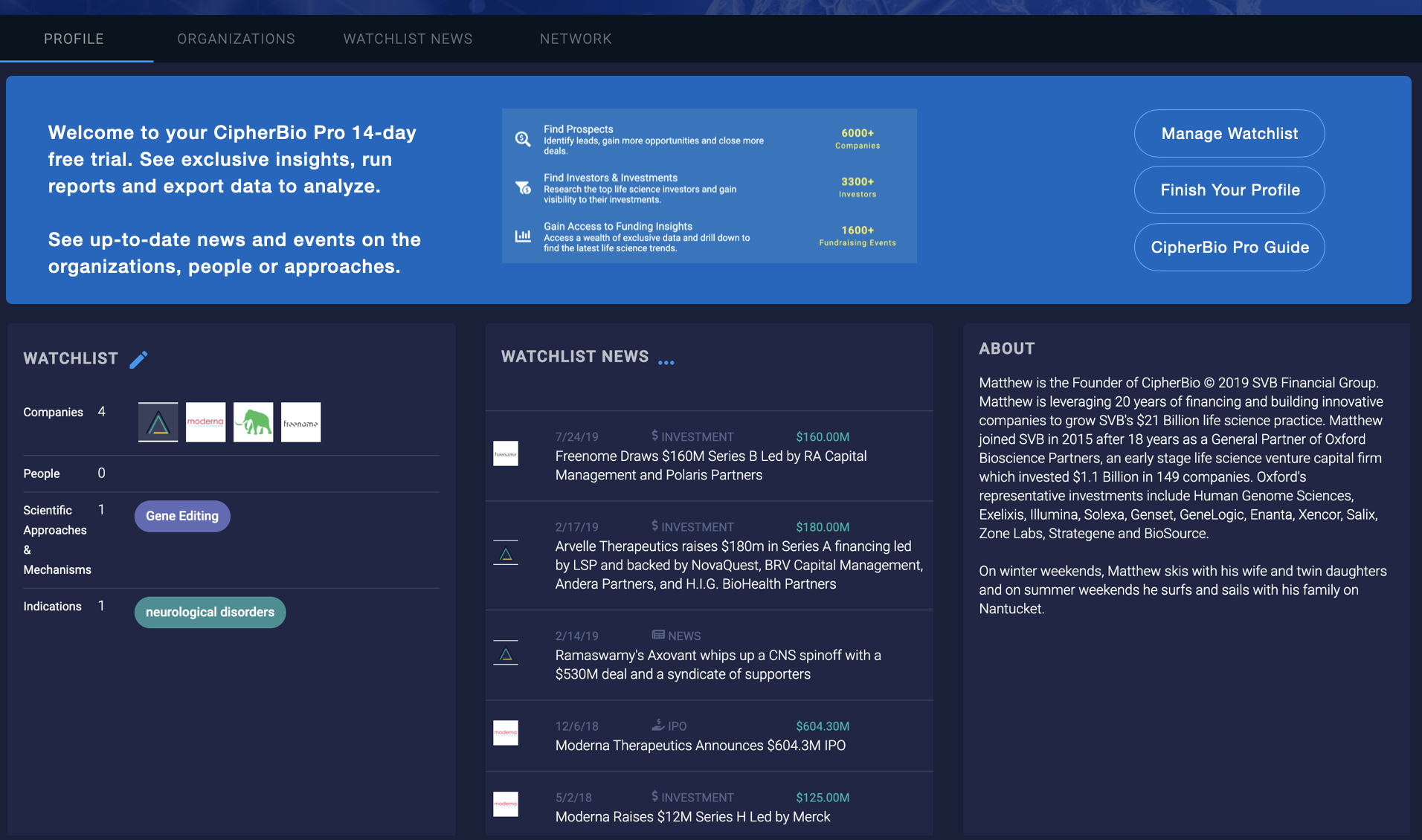
The first profile redesign did not produce the expected UX results. Observation, analytics, and user feedback showed that people did not want to maintain detailed profiles or read everything CipherBio could display. They wanted immediate intelligence, accurate data, and a faster route into the product.
Execution: Analytical controls
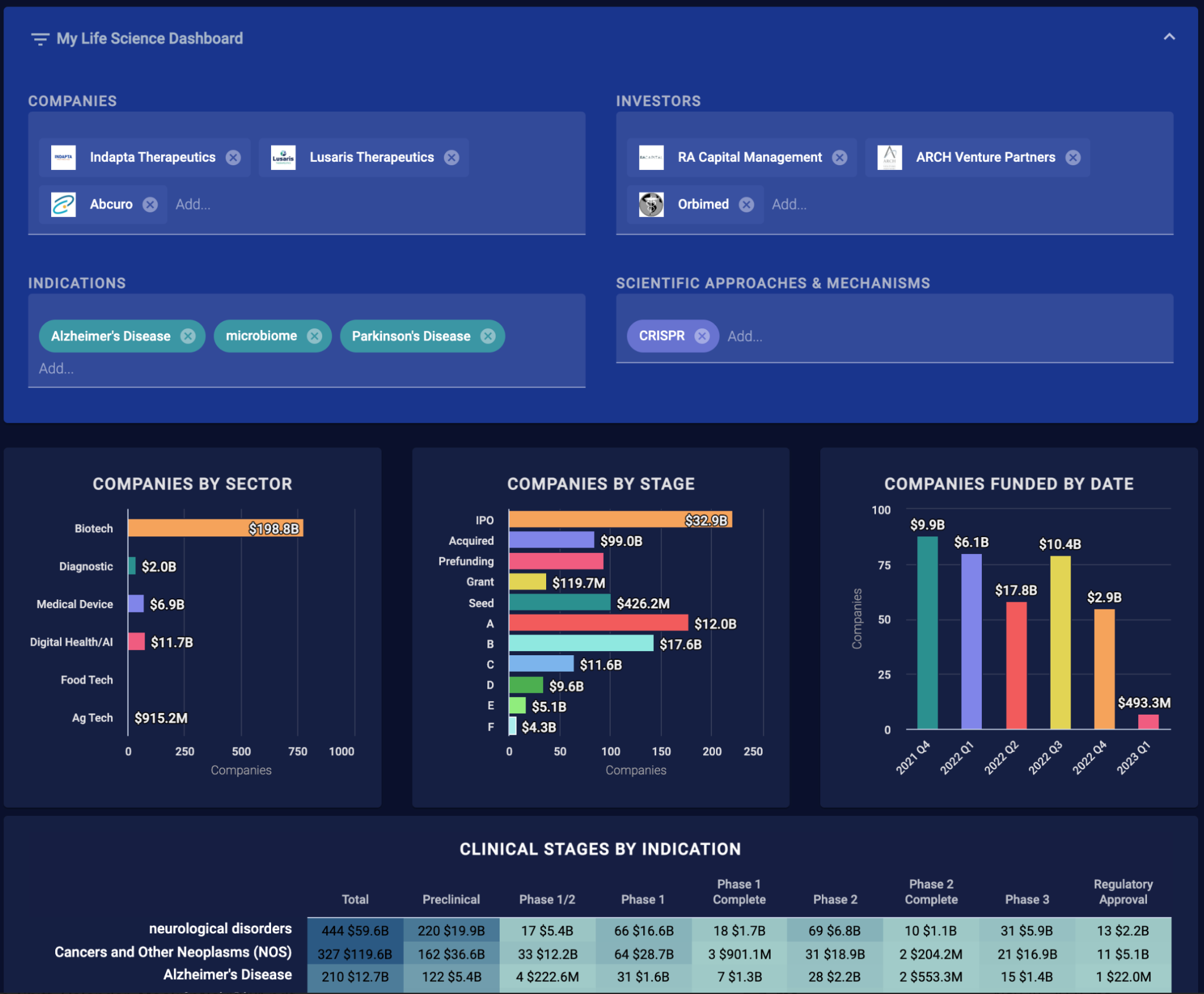
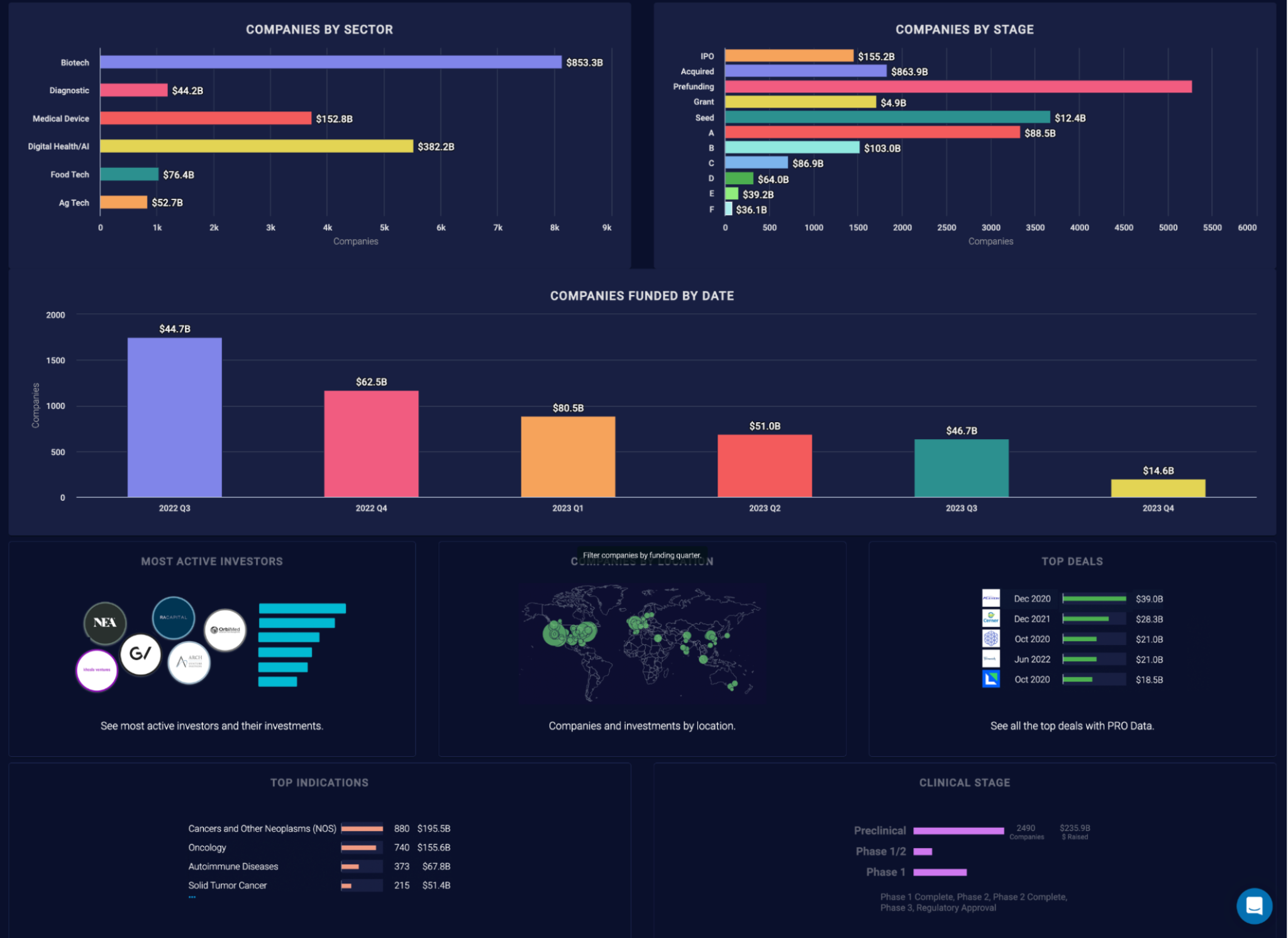
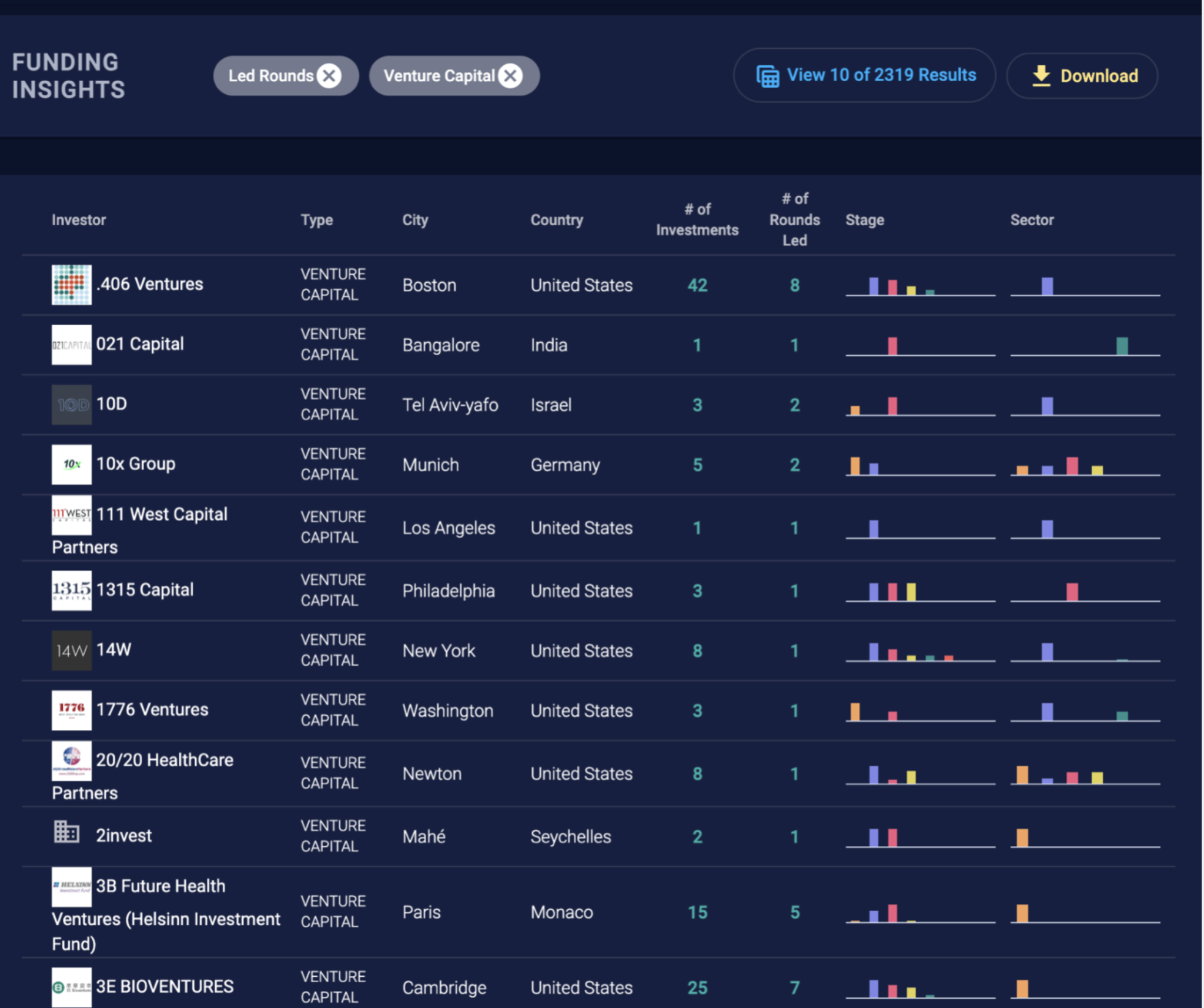
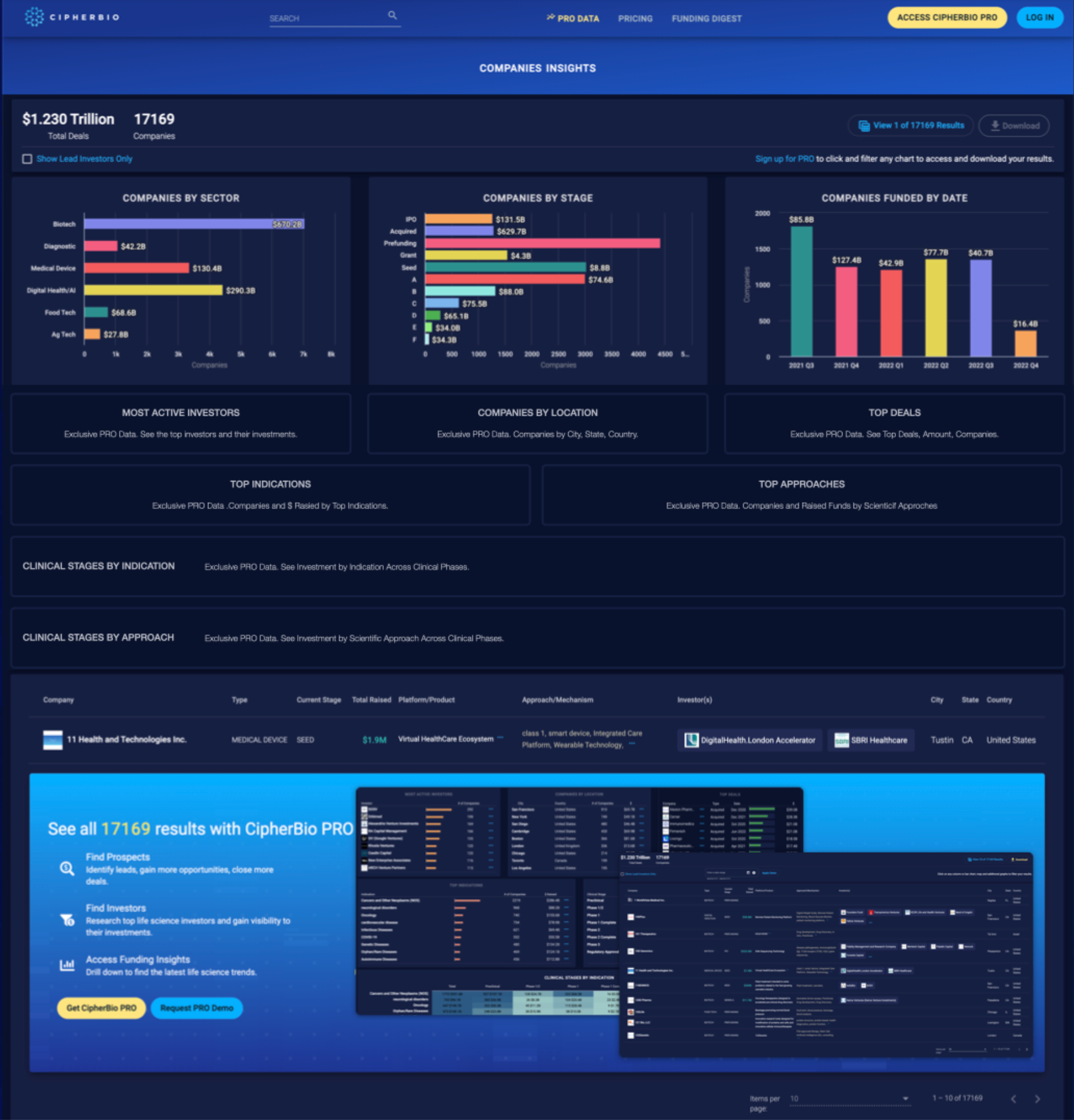
CipherBio's dashboards contained valuable clinical and funding data, but users could not always tell whether clicking a chart would filter it, what an export contained, or how to combine criteria. The visualization stack was working against the analytical task.

Execution: One release system
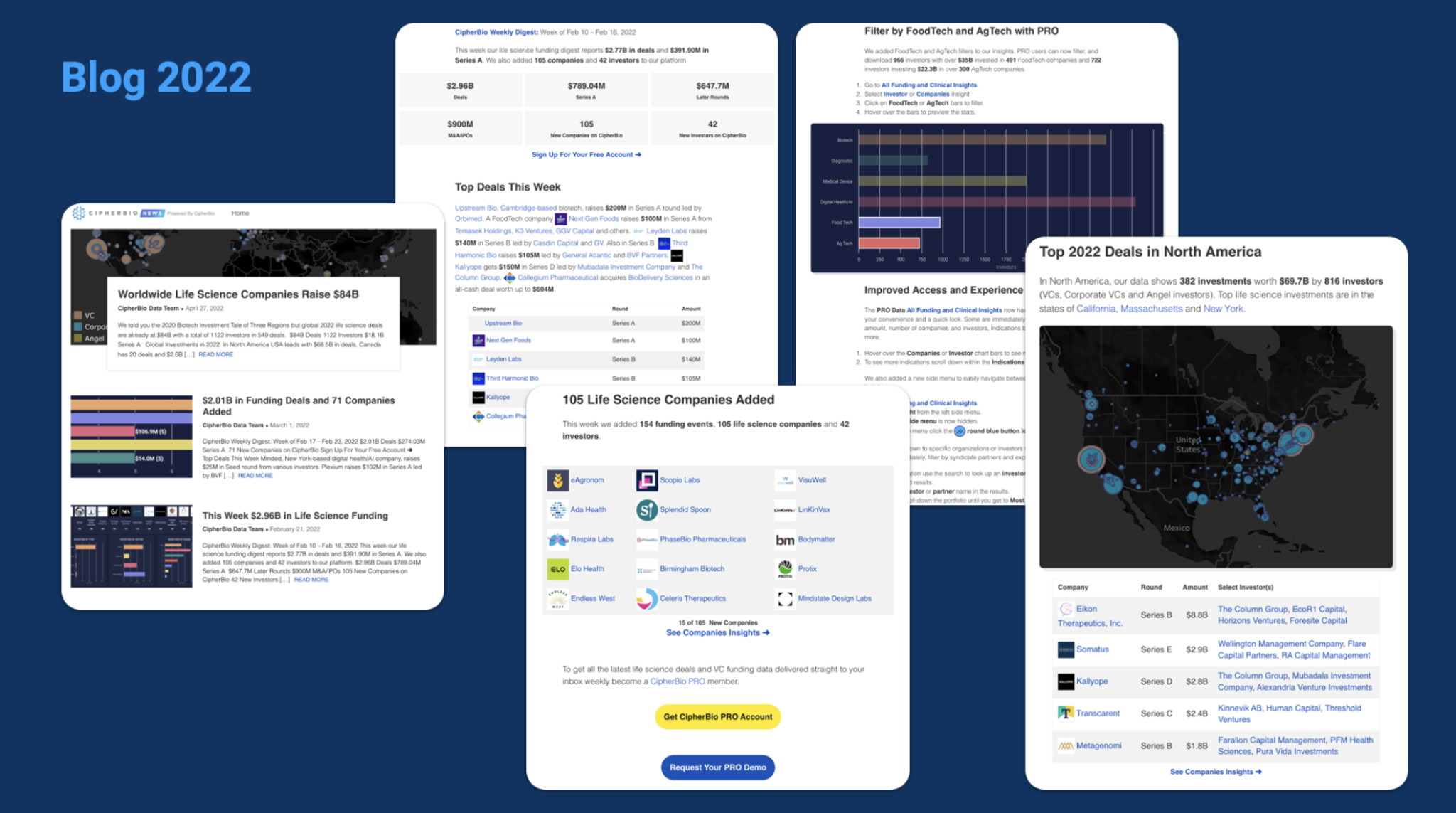
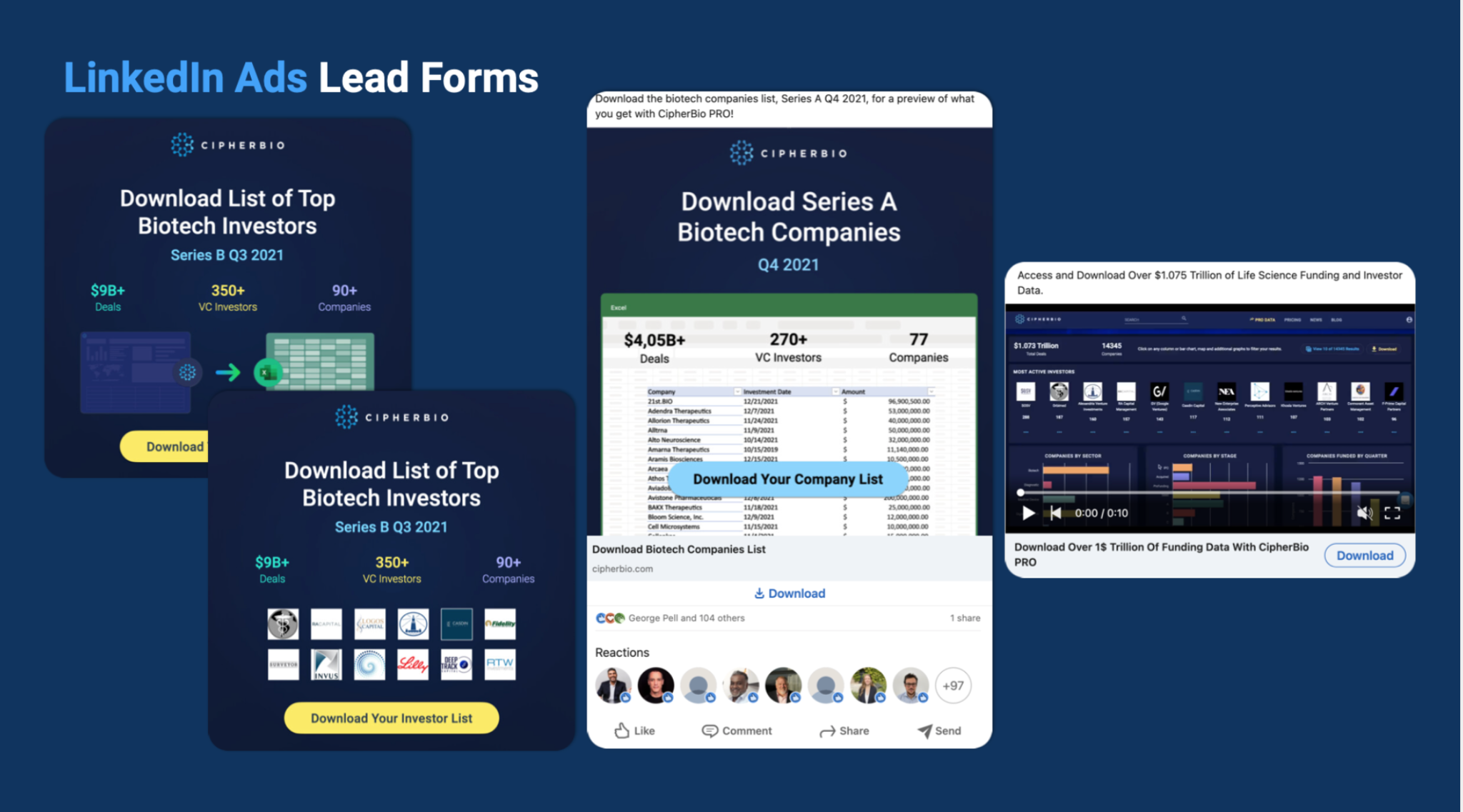
A new interface could not generate revenue if onboarding, pricing, landing pages, campaigns, and analytics told a different story. Design and development ran in parallel while research, functional demos, and marketing activity followed the release schedule.
What shipped
The work moved from research and product decisions into a responsive application, paid access model, analytical workflows, testing practice, and measurable acquisition system.
An Angular Material implementation optimized dense application pages from mobile through desktop.
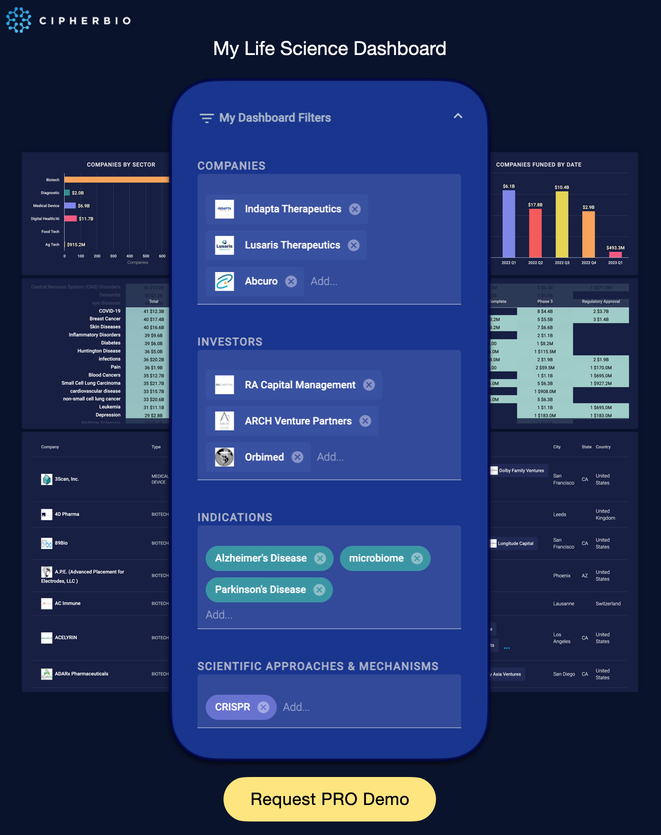
Search, visible filters, multi-select dashboards, readable tables, and curated CSV exports.
Basic, PRO, and Enterprise access with onboarding, gating, trials, and upgrade paths.
Technical SEO, analytics, landing pages, product-led content, campaigns, webinars, and feedback loops.
Impact
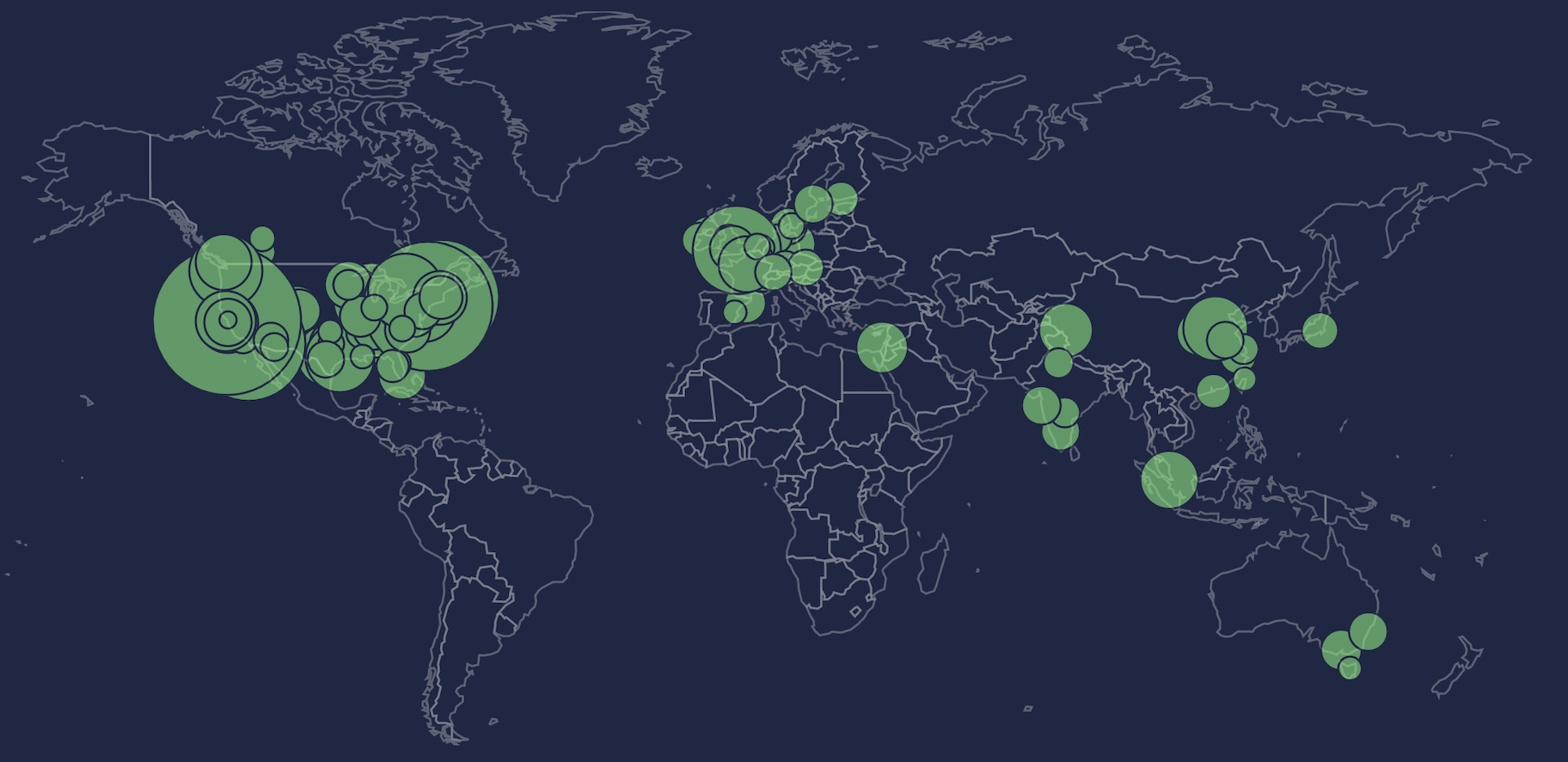
Reported company outcomes from 2022 following the multi-year redesign and growth work. Product design, front-end development, data, sales, customer service, engineering, QA, and marketing all contributed. The $1.5T+ figure describes the scale of funding data represented by the platform, not an outcome caused by this work.
What CipherBio proved
The most durable lessons were not about a particular screen. They came from aligning value with users’ jobs, letting evidence change the product, making complexity explicit, and refusing to separate design from implementation and acquisition.
Paid tiers became credible when access, depth, and price reflected distinct user decisions—not simply more records.
A finished feature is not valuable because it took time to build. Remove it when observation and usage show that it creates work instead of value.
Dense analytical products need visible controls, interpretable states, and predictable exports more than novel interaction patterns.
Research, product decisions, front-end implementation, onboarding, analytics, and acquisition work better when they mature together.